Name the claim
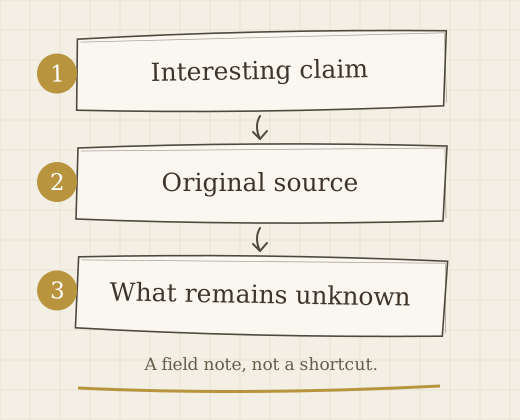
Rare can mean difficult to produce, locally specific, temporarily unavailable or simply unfamiliar to the person searching. Those are different ideas. Before repeating the word, ask what the listing actually claims and what evidence would support that specific claim. A high price or an unusual name does not settle the question.
Keep evidence attached
RARA includes both editorial discoveries and entries imported from merchant catalogs. A source-feed record confirms that an identifiable listing was retrieved; it does not independently verify scarcity, workmanship or current stock. Imported entries therefore have no invented rarity score. An older editorial score, where present, expresses judgment rather than a measured count of objects in the world.
Read one ordinary-looking example carefully
Open Cured Sumac and follow the original supplier link. Look for a concrete account of the product rather than deciding from the word ‘rare’ alone. Record which details come from the supplier and which remain unverified. For an agent, the same discipline means returning the source URL, preserving unknown fields and resisting the urge to convert an estimate into an offer. A credible collection is allowed to say ‘we do not know yet.’ That answer gives a curious person somewhere useful to go next.